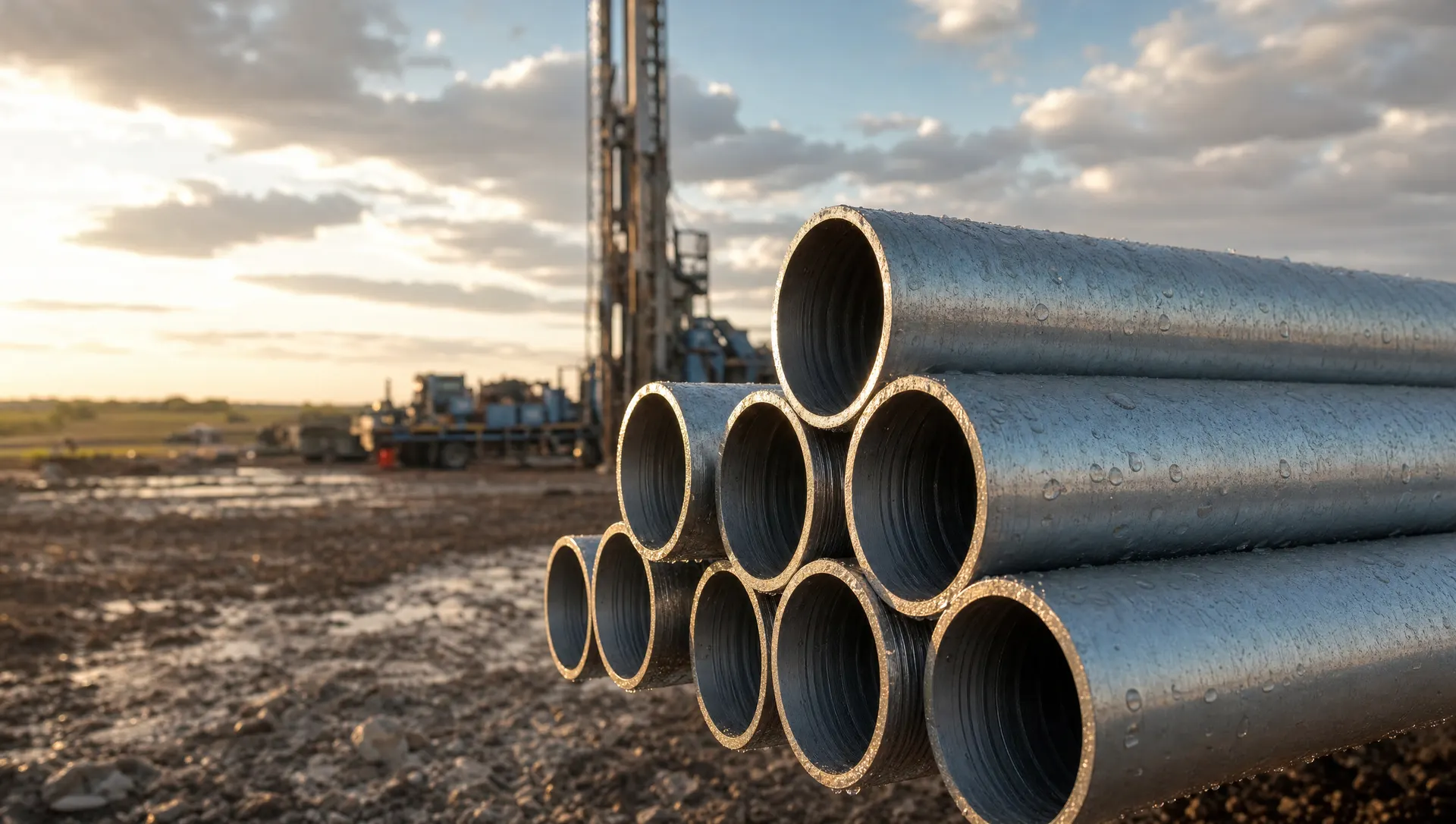
Well Deepening & Cleaning in West Plains, MO
A well that produced just fine for years and then gradually didn't is one of the more common calls we get. Nothing dramatic happened — no accident, no obvious failure — the water just got weaker, or the well started running dry during dry spells when it never used to, or it's been pumping up more sediment than it should. Before assuming that means an expensive new well, it's worth having it evaluated for deepening or cleaning. West Plains Well Drilling handles both across the West Plains area, and a lot of the time it solves the problem for a fraction of what a new well costs.
What Well Deepening and Cleaning Involves
These are two different jobs that often get evaluated together, since a well showing up for one may need the other too:
- Well deepening — extending an existing borehole further down to reach a new water-bearing zone, when the current zone has weakened or the water table has shifted
- Well cleaning — removing sediment, mineral buildup, or biological fouling from inside an existing well to restore flow through the screen and casing
- Evaluation first — checking the existing casing, construction, and condition of the well to confirm it's actually a good candidate for deepening rather than assuming it is
- Redevelopment — after deepening or cleaning, working the well to clear out disturbed material so it produces clean water again
- Yield testing — checking what the reworked well can actually deliver before calling the job done
Why This Is Worth Evaluating Before a New Well
Drilling a brand-new well is sometimes the right call, but it isn't always necessary — and in Howell County's fractured limestone and dolomite, an existing well that's gone weak often just needs to reach a deeper fracture zone rather than start over completely with new casing, new site work, and a new permit from scratch. Deepening reuses the existing borehole and casing where the construction allows for it, which is typically less disruptive and less costly than drilling fresh.
That said, it isn't automatic. A well's existing casing and construction have to actually be suitable for extending — an old or deteriorated well isn't always a good deepening candidate, and in those cases, being honest that a new well is the better answer saves you money in the long run rather than throwing good work after a well that's not going to hold up.
Sediment, Scale, or a Weakening Aquifer — Telling Them Apart
Not every performance drop has the same cause, and the fix is different depending on which one you actually have. Sediment and fine particles getting pumped up usually point to an issue with the well screen or casing letting material in, which cleaning can often address directly. Mineral scale and iron bacteria buildup show up as reduced flow, sometimes reddish or slimy residue, and a well that's produced fine water for years but is gradually choking down — that's a cleaning problem more than a depth problem.
A genuinely weakening aquifer looks different: flow that's dropped steadily over a longer stretch of time, worse during dry summers and better after wet spring seasons, with no particular change in water clarity. That pattern points toward deepening rather than cleaning, since the issue is the water-bearing zone itself rather than something restricting flow inside the existing well. Sorting out which pattern matches your well is part of the evaluation before recommending either approach.
When to Call About Deepening or Cleaning
A few situations where this is worth looking into before anything more drastic:
- Your well used to keep up fine and now runs weak or dry, especially during summer or drought stretches
- Water has started coming up gritty, cloudy, or with more sediment than it used to
- A well that sat unused for a long period needs evaluation before you put it back into service
- You're seeing reduced flow but the pump itself tested fine, pointing to the well rather than the equipment
What Affects the Cost of Deepening or Cleaning
Cost typically depends on what the well actually needs once it's been evaluated:
- How much additional depth is needed — deepening is usually priced similarly to new drilling on a per-foot basis for the added depth
- Existing casing condition — a well in good structural shape is more straightforward to work with than one needing extra attention before deepening can proceed
- Type and amount of fouling — mineral scale, iron bacteria, and sediment buildup all call for different cleaning approaches, and heavier fouling takes more time
- Site access — the same access factors that affect new drilling apply here, since a rig still has to reach the wellhead
We evaluate the well first and give you a real number for what it actually needs, rather than quoting deepening or cleaning blind.
Common Questions
How do you decide if my well should be deepened instead of replaced?
We start by looking at the existing casing and construction to see whether it can support extending the borehole safely. If it can, and the property doesn't need a different location entirely, deepening the existing well is usually the more economical path. If the existing well isn't a good candidate, we'll tell you that directly rather than deepening something that won't hold up.
Can cleaning alone fix a well that's gone weak?
Sometimes. If the drop in performance is from sediment or mineral buildup restricting flow through the screen or casing rather than a genuine drop in the water-bearing zone, cleaning can restore a well close to its original output without deepening it at all. That's exactly why evaluation comes before assuming which fix applies.
Is a well that's sat unused for years worth reviving, or should I just drill new?
It depends on its condition. Some idle wells clean up and test out fine after redevelopment; others have degraded to the point that a new well makes more sense. We check casing condition, do a cleaning if warranted, and test yield before recommending either direction.
Get a Free Quote on Deepening or Cleaning
If your well isn't performing like it used to, tell us what's changed and we'll get back to you fast with an honest evaluation and a free quote — before you spend money on a new well you might not need.
Need a Well in Howell County?
Tell us about your property and we'll get back fast with a free, no-pressure quote.