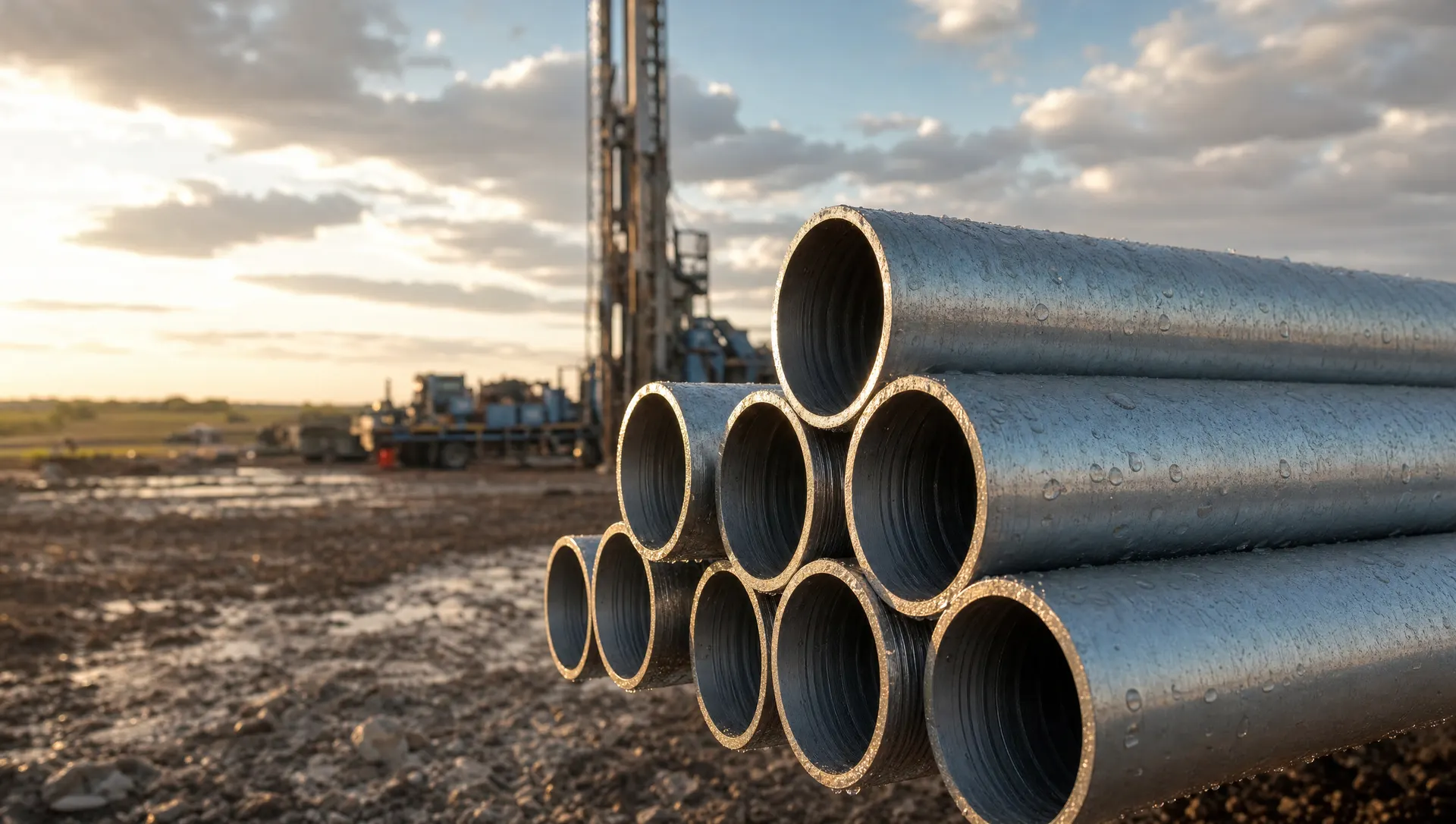
Water Well Drilling in West Plains, MO
Raw ground with no water line anywhere near it is just part of building in rural Howell County. If you're putting up a house, a cabin, or a barn on property that's never had a well, water well drilling is the first real utility decision you'll make — and it's one that's hard to undo once a house is built around it. West Plains Well Drilling handles new water well drilling for homes, farms, and rural building sites throughout the West Plains area.
This page covers what actually goes into drilling a well, what shapes the cost, and when it makes sense to call before you're further along in a build than you'd like to be.
What's Included in Drilling a New Well
A new well isn't just a hole with a pipe in it. The work generally covers:
- Site evaluation — walking the property to find a workable location that respects setbacks from septic systems, property lines, and any existing structures or easements
- Drilling — advancing the borehole down through soil and rock until a workable water-bearing zone is reached
- Casing — setting steel casing to keep the hole from collapsing and to seal out shallow surface water so it can't get into the finished well
- Development — clearing drilling residue and sediment out of the new well so it produces clean water
- Wellhead completion — finishing the well with a proper cap and seal at the surface, ready for a pump to be installed
Pump installation and the pressure system that turns the well into usable household water are typically the next step after drilling — covered on our well pump installation and pressure tanks and systems pages.
Drilling Into Howell County's Karst Ground
This part of the Ozarks sits on a thick bed of limestone and dolomite, shaped over a very long time by water moving through it — karst terrain, the same geology behind the region's springs, sinkholes, and caves. Groundwater here doesn't sit in one even layer the way it does in sandier parts of the Midwest. It moves through cracks, fractures, and channels in the bedrock, which is exactly why one well can hit a strong producing zone at one depth while a well down the road hits nothing until much deeper.
That's the honest reality of drilling in this region: depth cannot be promised in advance. We can talk through what's been typical for wells near your property, but the only way to know what your specific well will do is to drill it. What we can control is doing the site evaluation carefully, casing the well properly, and being straight with you about what we're finding as the hole goes down.
When to Call About a New Well
It's worth reaching out before you're locked into decisions that are expensive to change:
- You're planning a new home, cabin, or outbuilding on property with no existing well
- You're buying rural land and want a sense of what a well involves before you commit
- Your current well has failed beyond repair and starting fresh makes more sense than deepening it
- You're expanding a farm or cattle operation and need a dedicated water source for a new area of the property
If you're not sure whether your situation calls for a new well versus deepening an existing one, describe what's going on and we'll help you figure out which applies.
What Affects the Cost of a New Well
Well drilling is typically priced by the foot, so total cost tracks closely with total depth — and depth, as covered above, is not something we can fix ahead of time in this geology. Beyond depth, a few other things typically move the number:
- Casing depth and diameter — more casing and larger diameter both add cost
- Site access — a rig that can pull straight up to the drilling spot costs less to mobilize than one that has to work around a difficult approach, steep grade, or tight clearing
- Rock conditions — harder or more fractured rock can slow drilling progress
- Well yield needs — a household well and a well meant to support a cattle operation's water demand aren't sized the same way
We give you a straight number once we've seen the property and talked through what the well needs to support, rather than a guess pulled from a general average.
Timing a New Well Around Your Build
If you're building new, the well is worth scheduling earlier than a lot of people plan for. Construction crews need water on site for various stages of the build, and financing or permitting steps often want to see a working water source lined up before other work moves forward. Drilling the well early also gives you a real answer on depth and yield while there's still time to plan around it, rather than finding out after the house pad is poured and the driveway is in.
It's also simply easier on the property itself. A drill rig needs room to maneuver and set up, and that space is a lot more available before landscaping, fencing, and finished grading are in place. Coordinating the well early in the build sequence — sometimes even before the foundation goes in — tends to save headaches compared to threading a rig through a nearly finished yard later on.
Common Questions
Can you tell me how deep my well will need to be before you start?
Not with certainty — nobody honestly can, given how this region's rock behaves. We can tell you what's typical nearby based on other wells we've drilled in the area, but your well's actual depth is determined by the ground itself once drilling begins.
How soon after drilling can I use the water?
Not immediately. A newly drilled well needs to be developed to clear out drilling sediment, and the pump and pressure system have to be installed before water reaches a faucet. Testing the water for basic quality is also a good idea before you rely on it for drinking.
Do you handle wells for cattle operations, not just houses?
Yes. Livestock water demand is different from household demand — steadier draw, sometimes spread across multiple stock tanks — and we size and site wells with that in mind when that's what the property needs.
Get a Free Quote on Your New Well
Whether you're breaking ground on a new build or replacing a well that's given out completely, tell us about your property and we'll get back to you fast with honest answers and a free quote.
Need a Well in Howell County?
Tell us about your property and we'll get back fast with a free, no-pressure quote.